Sunday, June 8, 2014

Important lessons for Canadian borrowers and investors in Europe’s historic plunge into negative interest rates

The European Central Bank (ECB) has lowered its interest rates to unprecedented levels, to the point where it actually costs money for private banks to deposit money with them. The rate they now pay on deposits is negative 0.1%. And Canadian GIC investors thought they had it tough?

While Denmark and Sweden have experimented with negative interest rates, the ECB is the first major central bank to do so. Although rates in Canada have been described as “having nowhere to go but up” in recent years, Europe’s decision potentially suggests otherwise.
This is a modern day experiment in central banking to discourage banks from hoarding cash. One of the key intentions of the rate move is to encourage bank lending, which would have a resulting impact on spending, economic growth and inflation.
A further impact of the cut should be to lower the value of the euro and make EU exports more competitive, a big win for European exporters.
The European economy has really not kick-started after the 2008 recession and quite to the contrary, has experienced a ripple effect of economic setbacks.
It may come as a surprise to many investors that the Euro Stoxx 50 index is up 5.5% year-to-date and 21.6% in the past 52 weeks, after posting a 26.0% increase in 2013. It’s important to know that negative headlines don’t necessarily mean that stocks are going down, or that they are going to go down. Quite to the contrary, sometimes such events can prove positive for stock returns.
So what does this mean for Canadians? I’d say there are important lessons for borrowers (some of us) and investors (most of us).
Borrowers have got to wonder if low rates are here to stay or if they could get lower. Maybe 2.99%, 5-year fixed rate mortgages aren’t such a good deal after all? If rates are falling elsewhere, why not here?
The other side of the coin is to consider the fact that the ECB has lowered rates because they’re concerned about deflation, a decrease in prices where inflation actually goes negative. Deflation increases the real value of debt, making it harder to pay back debt when prices, incomes and asset values are declining. And given the precariously high debt levels in Canada, deflation could be particularly difficult if it ever came home to roost.
The Bank of Canada has been worried about inflation levels, but recent numbers have been quite positive.
I’d say the most important lesson for investors is that double-digit portfolio returns can’t be counted on when doing your retirement planning. Stocks have performed reasonably well in recent years, but low interest rates, low inflation and low growth are becoming increasingly prevalent within the developed world.
And while many Canadians would echo criticisms of the ECB move by Germany that low rates penalize savers, the short and potentially medium term reality of fixed income investing is a low yield.
In particular, those who are close to or into retirement need to evaluate what a sustainable withdrawal rate is from their investment portfolio to ensure they don’t outlive their savings.
Jason Heath is a fee-only certified financial planner and income tax professional for Objective Financial Partners Inc. in Toronto.
Thursday, June 5, 2014

Stop worrying! The 'new normal' is over: Pros

"I don't think investors have even begun to appreciate this better economic news," said Don Luskin, chief investment officer at Trend Macro, pointing to better-than-expected new factory orders and auto sales reports released Tuesday.
"We have been conditioned by five years of a crumby recovery to this idea that we're going to have 2 percent growth as the new normal," Luskin said on "Squawk on the Street." "Folks, the age of the 'new normal' is over."

Tuesday, June 3, 2014

Apple Splits Stock 7 for 1 Share June 9 2014

Apple shares once topped $700 (U.S.), then fell below $400, and are trading this month above $600 for the first time in more than a year. All those nice, big numbers are heading to the dustbin in the coming days, however, as Apple splits its shares seven-for-one.
It is said that once Apple Inc. began its remarkable run, founder Steve Jobs was dismissive of the idea of splits. So – for a time, anyway – was his successor, current CEO Tim Cook, who told shareholders two years ago that splits “do nothing” for investors. Better to let the sticker price of the stock escalate to the levels of the company’s shiny gadgets, one supposes.
Splitting shares, however, does accomplish something: It makes it slightly easier for individuals to buy a stock. Now that Apple has conceded on this matter, then, it’s time for some other companies – and yes, we will name names – to stop acting so cool and follow suit by splitting their shares. For investors’ sake.
Apple’s split is scheduled for June 9, benefiting all who own the shares as of June 2. In the strictest sense, the split will “do nothing,” as one Apple share trading at $700 is no more valuable than seven Apple shares trading at $100. That’s the basic economics of a stock split, and the reason why market professionals say splits have little meaning.
It’s certainly true if each of your positions is measured in millions of dollars, or even hundreds of thousands. There are individual investors, however, who want to invest a couple of hundred thousand dollars in a couple of dozen stocks. That means positions in the $5,000 to $10,000 range.

Academic research has suggested stocks that split tend to outperform the shares of similarly sized companies in the near term, in part because they’re an underappreciated signal of confidence: A management team that recommends a split to its board is confident the shares won’t drift lower. There are plenty of holdouts these days, however, as the number of splits among companies in the S&P 500 has drifted lower since the Great Recession – possibly because management watched big companies such as Citigroup do a “reverse split,” decreasing their share count, in order to keep the stock from trading below $5.

Sunday, June 1, 2014

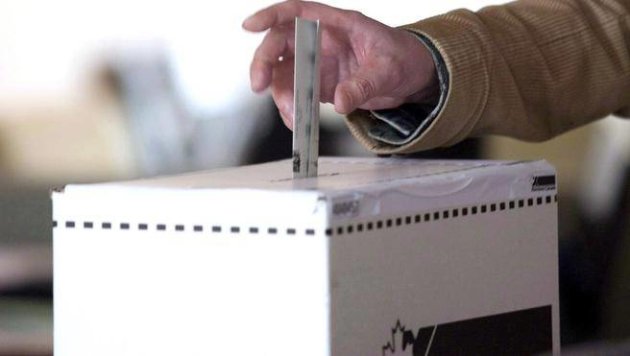
Ontario Elections voters have the legal right to decline their ballot and have it counted separately from a spoiled ballot.


In a statement released on Wednesday, Democracy Watch asked Elections Ontario — by threat of court action — to advertise the fact that voters have the legal right under section 53 of the Elections Act to decline their ballot (i.e. vote “none of the above”) and have it counted separately from a spoiled ballot.
[Section] 53. An elector who has received a ballot and returns it to the deputy returning officer declining to vote, forfeits the right to vote and the deputy returning officer shall immediately write the word “declined” upon the back of the ballot and preserve it to be returned to the returning officer and shall cause an entry to be made in the poll record that the elector declined to vote.
R.S.O. 1990, c. E.6, s. 53.”
In an interview with Yahoo Canada News, Democracy Watch's Duff Conacher said that if Elections Ontario did advertise that option — as part of their outreach materials — voter turnout would indeed increase.
"There are some people who don't support any party that has a candidate in their riding or do not support any of the parties' platforms," he said.
"They may go and spoil their ballot but when you spoil your ballot nobody knows whether you're stupid or you're doing it intentionally. And that's why you have a right to decline your ballot...so you can go and vote none of the above."
[ More Ontario election coverage: First attack ads largely miss the mark: expert ]
In the future, Conacher would like to see new regulations so that ballots actually have a line that explicitly says "None of the Above" and space for voters to explain their reason for selecting that option.
"I think a lot of them would say 'don't like the voting system' or 'can't be held accountable for broken promises,'" Conacher said.
"Why not track that if you really want to know why people aren't voting for any one party?"
For their part, Elections Ontario says that their online guide and a poster of voters rights — which will be placed at every polling location — include "mentions" about the right to decline. They also note, however, that increasing voter turnout isn't necessarily just their responsibility.
"Political parties, candidates, interest groups, media and the voters themselves all have a role to play in increasing participation in our provincial elections," Andrew Willis, a communications coordinator for Elections Ontario, said in an email to Yahoo.
"We are a non-partisan agency and as such, our role is not to get individuals to vote. Rather, we facilitate the vote – and, if one chooses, the right not to vote."
What do you think? Would a 'none of the above' option entice more Ontarians -- and more Canadians -- to vote in elections?
(Photo courtesy the Canadian Press)