Thursday, February 27, 2014

TD’s mutual funds VS TD Index Funs and lowcost mer E-Series

STRATEGY LAB

How do TD’s mutual funds stack up against its index funds?


Andrew Hallam is the index investor for Globe Investor’s Strategy Lab. Follow his contributions hereand view his model portfolio here.
Quirky imagery works well when explaining concepts to kids. Based on my experience as a high school personal finance teacher, the more ridiculous the better. So, what do index fund managers do all day? They work from hammocks like chilled hippies – if you ask my students.
Accurately tracking an index requires skill. But active fund managers burn more cranial calories. After all, index fund managers don’t scrutinize the quality of a company’s reported earnings. Nor do they wrap their heads around projecting future cash flow. They don’t measure the robustness of balance sheets, nor do they wrestle over whether a stock is undervalued or overvalued. And because they do none of those things, index funds charge lower investment costs.
With TD Asset Management’s wide range of mutual funds, it’s easy to imagine an in-house contest between the driving efforts of the active managers and the passive index practitioners. They butt heads in seven broad categories with 10-year track records: Canadian Equity, U.S. Equity, International Equity, Canadian Bond, Canadian Balanced, Japanese Equity and European Equity.
TD has two broad Canadian equity funds that qualify: their TD Canadian Equity and theirCanadian Blue Chip Equity fund. Costing 2.18 per cent and 2.41 per cent respectively, their combined average 10-year return was 5.99 per cent. TD’s e-Series Canadian index fund, however, rode the waves to winning returns. Costing just 0.33 per cent, it averaged 7.32 per cent for the decade.
In the broad Canadian bond category, TD’s active managers toiled again in vain. TD’s Canadian Bond Fund is the company’s sole category representative for the decade. It earned 4.4 per cent, after fund costs of 1.11 per cent. TD’s cheaper e-Series Bond Fund earned a smooth 4.7 per cent return, after charging 0.5 per cent.
Just one actively managed TD contender carries a 10-year international equity track record. TheirGlobal Growth Fund, costing 2.55 per cent, averaged 3.6 per cent for the decade. Company bragging rights, once again, go to the hammock loungers. TD’s e-Series International Indexaveraged 4.13 per cent, after costing 0.51 per cent.
Broad U.S. equity fund managers did better, but still underperformed their less energetic colleagues. The company’s active torchbearers managed the U.S. Blue Chip Fund and their U.S. Quantitative Equity Fund. Combined annual returns averaged 4.16 per cent, after costing 2.55 and 1.6 per cent respectively. TD’s e-Series U.S. index edged them out, earning 4.17 per cent after charging 0.35 per cent.
The absences of low cost e-Series indexes in the remaining three categories mean TD’s active managers had easier targets. Carrying the indexing flags instead are the I-Series funds. While costing more than their e-Series counterparts, their passive aggression still triumphed. TD has two actively managed balanced funds with decade track records, including their Balanced Growthand Balanced Income Fund. They earned a combined 10-year average of 3.79 per cent after costing 2.3 per cent. TD’s I-Series Balanced Index walloped them. Despite charging 0.89 per cent, it earned 5.21 per cent.
Many proponents of active management claim clever traders can capitalize in lacklustre markets, while those settling for market returns flounder. So how did TD’s active managers do with the sluggish Japanese market? TD’s Japanese Growth Fund managers eked 0.11 per cent gains per year for the decade, after costs of 2.83 per cent. Meanwhile, the company’s I-Series Japanese Index earned 0.71 per cent after charging 1.06 per cent.
Completing the perfect index-winning sweep, TD’s European Index also beat its actively managed counterpart. TD’s European Growth Fund averaged 3.13 per cent after charging 2.82 per cent. The I-Series European Index earned 4.05 per cent after costing 1.04 per cent.
Be careful, however, before condemning TD’s actively managed funds in favour of active products from another firm. Promotion is a huge part of the mutual fund industry. If a fund is doing poorly, a company can merge it with another fund or change its name to obliterate its track record. According to SPIVA (Standard & Poor’s index versus active) Canada, nearly 42 per cent of Canada’s active U.S. equity funds mysteriously disappeared during the five years ended June 30, 2013. Nearly one third of Canadian and international equity funds were buried in the desert during the same time period.
Such data require an even healthier dose of skepticism when comparing actively managed funds. Investors are better off building diversified portfolios of index funds. After doing so, they can ignore the markets, while chilling out in their own hammocks.
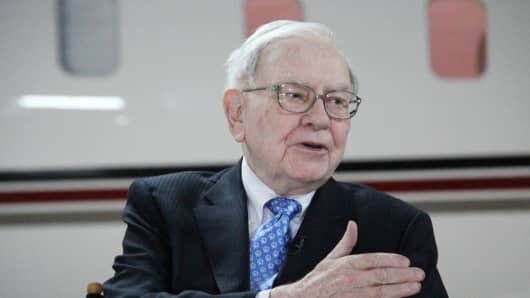
 

Warren Buffett Strategy In 5 Steps

The chase by Frances Horodelski:

Warren Buffett has done something unusual this year with his annual shareholders letter – he’s released excerpts of it early through a piece in an upcoming edition of Fortune. It is currently making the rounds. Here are five lessons he learned from buying a piece of farm land and a rental property in NYC.

 1. You don’t need to be an expert to achieve satisfactory investment returns; 
2. Focus on the future productivity of the asset and if you can’t make a rough estimate of its future earnings, forget it;
 3. If you focus on the prospective change in price of the asset, you are a speculator and he says he can’t speculate successfully and is skeptical of those who say they can; 
4. Don’t worry about daily valuations focus on the future; 
5. Forming macro opinions or listing to the macro (or market predictions of others) is a waste of time.
Mr. Buffett continues on in the letter to discuss other items including the “what” and “when” of investing with my particularly favourite quote is this from Barton Biggs: “A bull market is like sex. It feels best just before it ends.”
He also highlights that in his will (beyond his charitable donations of his Berkshire Hathaway shares) his instructions to the trustee is to keep 10% of the cash in short term government bonds and the 90% in a very low cost S&P 500 index fund. He also recommends a read of The Intelligent Investor, Ben Graham’s classic book on investing. He reminds us of Ben’s adage: Price is what you pay; value is what you get.

Wednesday, February 26, 2014

In the current environment, short-term bonds are your best bet

by Rob Carrick

What to do with bonds right now? Just the opposite of what the federal government is doing.
That’s the sensible recommendation made recently by Raymond Kerzerho, director of research at PWL Capital. Reading the latest copy of the Finance Department’s Debt Management Strategy publication, Kerzerho noted that the feds are extending the maturity of country’s debts. In practical terms, that means issuing more and more 10- and 30-year bonds to lock in today’s low interest rates.
You, the investor, should do the opposite, he argues. While the government’s job is to minimize the amount of interest it pays, investors want to maximize the interest they receive. The best strategy for doing that: Stick to short-dated bonds, which Kerzerho defines as maturing in less than 10 years.
v On the surface, there’s a logical disconnect here. Shorter term bonds have lower yields than longer-term bonds, which is to say you get less interest. The 30-year Government of Canada bond yield in late February was 3 per cent, compared to 1 per cent for a two-year bond and 1.7 per cent for a five-year bond. Why go short, then? To benefit from having bonds that mature in the not-too-distant future and hand you back money you can reinvest to take advantage of any increases in interest rates.
There’s another advantage to shorter term bonds. If interest rates do start to rise, short bonds will fall less in price than long-term bonds. The federal government won’t care a bit if the 30-year bonds it issues today fall in price in the years ahead. But investors may well be stunned at how much long-term bonds will drop in price if interest rates lunge higher.
The bottom line here is that short-term bonds will pay you less in the near term, but you get more stability in a rising rate environment and an opportunity to lock in those higher rates in a few years. Now, what’s the best way to put short-term bonds in your portfolio? A ladder of one- through five-year guaranteed investment certificates works well if you have zero need for liquidity. Individual bonds, government or corporate, can work, but individual investors often get a raw pricing deal on these.
One more idea: A laddered corporate or government bond exchange-traded fund, which you can find in the First Trust, iShares, PowerShares and RBC families. The benefit of the ladder is simple -- every year, you have bonds maturing that can be reinvested at higher rates. If those higher rates ever come, that is.

Most Successful Investor Ever - Warren Buffett


Warren Buffett says if you want to learn how to make money from the stock market you should look at how he made some money with two small real estate investments.
In an excerpt published by Fortune, from his upcoming annual letter to Berkshire 
Hathaway shareholders, Buffett writes about his purchase of a Nebraska farm and his investment in a retail property near New York University in Manhattan.
In both cases, he bought when prices were unusually low after bubbles had burst.
In both cases he had no particular expertise.

And most importantly, in both cases he invested because he thought the assets would be increasingly profitable, not because he expected to sell at a higher price.

"With my two small investments, I thought only of what the properties would produce and cared not at all about their daily valuations. Games are won by players who focus on the playing field—not by those whose eyes are glued to the scoreboard."
He warns against "letting the capricious and irrational behavior" of stock prices make an investor "behave irrationally as well."
In addition, Buffett argues, "Forming macro opinions or listening to the macro or market predictions of others is a waste of time."
When he bought the properties in 1986 and 1993, economic projections didn't matter to him. "I can't remember what the headlines or pundits were saying at the time. Whatever the chatter, corn would keep growing in Nebraska and students would flock to NYU."


As for not needing expertise, Buffett recommends a low-cost S&P 500 index fund for nonprofessionals, to "own a cross section of businesses that in aggregate are bound to do well." 
He also urges timid or beginning investors against going into stocks "at a time of extreme exuberance" and becoming "disillusioned when paper losses occur."
"The antidote to that kind of mistiming is for an investor to accumulate shares over a long period and never sell when the news is bad and stocks are well off their highs."
His bottom line fundamental advice: "Ignore the chatter, keep your costs minimal, and invest in stocks as you would in a farm."
By CNBC's Alex Crippen