After the Bell
The close: Very ouch
RTGAM
Suddenly, bullish investors have some explaining to do. After six weeks of fairly steady gains, North American indexes were dealt body blows on Monday, delivering their worst one-day setbacks since the remarkable stock market rally began in March.
The Dow Jones industrial average closed at 7841.73, down 289.60 points, or 3.6 per cent. The broader S&P 500 closed at 832.39, down 37.21 points, or 4.3 per cent - marking the biggest setback for the index since March 5.
Of course, there was no shortage of voices suggesting that the rally - the best since 1938 - was at risk of falling back to more moderate levels, simply because stocks tend to do that. Others suggested that the grim realities of the U.S. economy were bound to make the rally look far too optimistic.
However, this setback was marked by a violent retreat from U.S. bank stocks, suggesting something more specific at work here: Investors didn't like what they saw in Bank of America Corp.'s first quarter earnings, released before markets opened on Monday.
The shares tanked 24.3 per cent, despite reporting earnings of $4.2-billion (U.S.), after investors concentrated instead on rising credit loss provisions and the chief executive's warning that the bank faces "extremely difficult challenges." In other financial moves, Citigroup Inc. fell 19.5 per cent and Wells Fargo & Co. fell 16.1 per cent.
International Business Machines Corp. fell 0.8 per cent before it released its first quarter earnings after markets closed. Earnings were $1.70 a share, above expectations for $1.66 - but the shares fell 2.4 per cent in after hours trading.
In Canada, the S&P/TSX composite index closed at 9126.15, down 311.50 points, or 3.3 per cent. It was the index's sharpest drop since March 2.
Financials followed the U.S. lead, handing back some of the amazing gains of the past six weeks. Manulife Financial Corp. fell 7.8 per cent, Royal Bank of Canada fell 3.8 per cent and Toronto-Dominion Bank fell 5.4 per cent.
Energy stocks were also weak after the price of crude oil fell about 9 per cent. Suncor Energy Inc. fell 7.3 per cent.
Gold producers were among the few bright spots in the market, after the price of gold surged nearly $17 an ounce, to about $885. Goldcorp Inc. rose 7 per cent and Barrick Gold Corp. rose 7.9 per cent.
Copyright 2001 The Globe and Mail
Monday, April 20, 2009
Markets Tumble On Profit Taking Buy CLL
Sunday, April 19, 2009
Real Estate And The Recession...
All developers are scrambling and offering major discounts on pre-sale homes giving up homes for up to 40% off their original asking price. And many first time home buyers are jumping at the chance and lining up early for their spot at making a bid for these drastically reduced luxury condos.
Click to PlayIf you consider the battles and bid wars that many home buyers had to endure in the previous years, these offerings are their golden ticket to affordable housing.
This scenario is happening all over N. America and is even more apparent in the US. Sellers are using tactical advantages and mind games to lure more buyers into our currently depressed market by listing housing prices for well below market value to trigger bidding wars. And it's working.
But should buyers be jumping the gun? Let's take a look at both the Canadian and US housing market.
According to TD Economics, Canadian house prices have further to fall, while overbuilding in the residential market will prevent the sector from making a quick recovery from the current downturn in sales, prices and construction.
They also expect the average Canadian house price to fall to about $246,000 in 2009, down 24% from the peak of $324,000 in 2007. As of February, the average nation-wide house price stood at $282,000, down 13% from its peak. Based on those figures alone, it would appear that we still have another 11% decline to go.
The report also found house prices had been overshooting their fundamental value by about 9% since 2005 as speculation drove up prices and encouraged overbuilding, which I am sure every Canadian witnessed or participated in.
TD said Calgary and Edmonton had accumulated "worrisome" inventories of unsold single family homes, while the overhang of supply in Saskatoon's was at a historical high. Montreal also had a growing inventory of unsold condos and apartments.
Although Toronto and Vancouver have so far avoided a major oversupply in inventories, TD said the large number of condos under construction in both cities raised the possibility of mounting oversupply this year.
As housing prices correct, the excess supply of housing in the market will continue to weigh on the sector throughout 2009.
However, Canada should avoid a housing crash like the US because the oversupply of housing is much smaller.
TD estimates the overhang of residential homes in the Canadian market is equal to about three month's supply, compared to about 10 months in the United States - where conditions are much worse and likely to fall even further.
In RealtyTrac's US Foreclosure Market Report™ for Q1 of 2009, an astonishing one in every 159 U.S. housing units received a foreclosure filing during the quarter. Foreclosure filings were reported on 341,180 properties in March, a 17% increase from the previous month and a 46% increase from Mar 2008.
According to Moody's Economy.com, home value declines in Los Angeles for example, still have a long way to go. Based on historical balances of employment, housing sales, income, lending availability, foreclosures and vacancy rates, all dating back to 1982, home prices in the Los Angeles metro area still have 29% further to fall.
Total foreclosures are likely to be significantly higher in 2009 than they were in 2008, even with the mitigating effects of the Obama housing plan in the US. We also have to keep in mind that new home developments also compete with existing houses, whose inventories are still at very high levels.
Major lenders like Fannie Mae, Freddie Mac and JP Morgan have just recently lifted their foreclosure moratoriums which could signal the swelling of more cheap foreclosed homes this spring and summer.
The best real estate deals, it seems, are yet to come.
So take your time. This recession isn't going away tomorrow.
Best regards,
Ivan Lo
Equedia Network Corporation
www.equedia.com
Thursday, April 16, 2009
Genuity raises Bankers Petroleum price target to C$3.20 from C$2.90


http://www.cnbc.com/id/30242190
April 16 (Reuters) - * Genuity cuts Addax Petroleum to hold from buy * Genuity raises Vast Exploration to buy from hold * Genuity raises Addax Petroleum price target to C$33 from C$28 * Genuity raises Bankers Petroleum price target to C$3.20 from C$2.90 * Genuity raises Niko Resources price target to C$78 from C$65 * Genuity raises Petrominerales price target to C$12 from C$10.70 * Genuity raises Pacific Rubiales price target to C$7.80 from C$6.60 (Bangalore Equities Newsroom; +91 80 4135 5800; within U.S. +1 646 223 8780) COPYRIGHT Copyright Thomson Reuters 2009. All rights reserved.


Wednesday, April 15, 2009
BNN Interview With Harry S. Dent Today
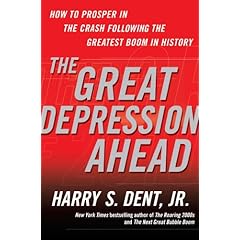
Harry Dent: Review & Customer Comments
Harry S. Dent Jr. is a well known author and prominent market forecaster. Over the years he's provided a long track record of hypotheses and predictions, some of which have been extremely accurate while others off the mark, but as the saying goes hindsight is always 20/20.
Born in 1950 in Berkeley, California Harry Dent maintained a stellar scholarly record throughout his life, graduating from USC at the top of his class. He would then go on to complete his MBA from Harvard Business School as a Baker Scholar.
Throughout his career as an economic researcher Harry Dent developed his own system, The Dent Method, for analyzing market directions. His approach focuses on interpreting consumer spending data collected throughout the maturation period of a family. This takes into account the spending habits of a person from their youth to retirement factoring in life stages of having children, buying a house, etc.
Using this formula he was able to accurately predict the slowdown in the Japanese economy at the end of the eighties, and the Dow's growth in the early nineties. He details his use of this method and a combination of other demographic statistics to reach his conclusions in many of his books.
Harry S. Dent's notable titles include "The Roaring 2000s," "The Next Great Bubble Boom," and most recently, "The Great Depression Ahead." In his latest book Dent explains why we haven't seen the worst yet, and predicts a larger drop in stocks and real estate and even higher unemployment rates up till 2013.
The great thing about Harry Dent's books and method is that he gives you a macro view of the economy and really delves deep into demographics for his supporting evidence. Thus, even if you don't agree with his predictions you can see the trends that he's using to formulate his argument.
Conversely, as with any other market forecaster his advice should be taken with a grain of salt. Dent has had his share of missed calls, notably his 2000 prediction of the DOW reaching 40k. Despite this I think there is a lot to be learned from his approach and his research into consumer spending habits.
This is a good example of why it's important to understand that there's no one investor out there with all the answers. It's up to you to learn as much as you can through a variety of resources in order to understand the big picture of trading. I would recommend using Harry's tips in conjunction with additional trading resources in an ongoing educational process.
One great tool that I personally use is INO TV, a site where you can view the trading systems of the world's top analysts. These are the exact same strategies they teach at their seminars where a seat would cost $2,000 -$3,000.