'Armageddon' in the oil patch
NORVAL SCOTT
Wednesday, October 08, 2008
CALGARY — Jeffery Tonken has lost a fortune over the past six weeks.
“It's Armageddon out there,” Mr. Tonken, the chief executive officer of junior oil and gas company Birchcliff Energy Ltd., said Wednesday.
“I've lost millions. Everyone has.”
The value of Canada's energy companies has been devastated since oil plunged from record levels in the summer. Among the 58 companies in the S&P/TSX capped energy index, about $110-billion in market value has been wiped out in the past six weeks, calculations show.
Despite being one of the success stories of 2008 – Birchcliff has capitalized on the B.C. gas rush – the company's shares have plunged from almost $16 in July to just over $6 today.
Mr. Tonken is far from alone. While the price of oil has fallen from $147 (U.S.) a barrel in July to below $90, the value of Canada's energy firms has been hit disproportionately as hedge funds and other investors liquidate their positions in sectors in which they had bought heavily, such as energy.
“There's some chaos and panic selling, and people have lost sense of the fundamentals,” said Harvest Energy Trust CEO John Zahary.
Harvest's unit price has fallen from $26 in June to below $11, also a hit for Mr. Zahary, who said he owns about 100,000 units.
“Clearly I've participated in the downturn – there's a reduction in my net worth, and that of other employees and shareholders,” he said.
“It's a substantial sum of money that is no longer there,” Mr. Zahary said.
Given the financial climate, Harvest is now unlikely to proceed with a $2-billion project to expand its refinery in Newfoundland unless it finds a partner, because that would consume too much of the company's capital, he added.
Since Labour Day, the value of the S&P/TSX capped energy index has been cut almost in half, in comparison with the 25-per-cent loss made on the S&P/TSX composite index in the same period.
The precipitous drop isn't just affecting trusts and juniors; oil sands giant Suncor Inc., for example, has seen its market capitalization fall from just under $70-billion in May to just over $27-billion.
“Hedge funds are selling anything off their shelves that they can,” said Bill Andrew, CEO of Penn West Energy Trust. The valuation of the trust – one of Canada's largest – has been halved since June, and is now just over double its annual cash flow.
But fundamentally, and despite the panic, oil and gas prices are still strong enough for companies to make profits, Mr. Andrew said. “It changes nothing at our operations.”
One concern for investors – especially in the junior side – is that banks will reduce or even refuse to renew revolving lines of credit, stymieing the ability of companies to expand, Birchcliff's Mr. Tonken said.
While Birchcliff doesn't have any debt to pay back in the short term, the company, like other juniors, will likely just spend its cash flow or even less in 2009, he added. Juniors often spend up to five times their cash flow as they chase rapid growth.
Calgary's analysts, many of whom maintained that companies were comparatively undervalued when oil was at $140 a barrel, say there is little by rational explanation for the collapse, which means Canadian oil patch assets now appear to be hugely underpriced.
“Buy some ammunition, go to the hills and hide,” said William Lacey, an analyst at FirstEnergy Capital Corp.
“We've gone beyond doomsday scenarios. There's no logic any more and this is an outright capitulation. Investors are simply throwing up their hands and saying ‘I'm out,'” he said.
According to Mr. Lacey, the drop means that companies will be re-evaluating their future strategies, and will now increasingly buy back their own shares because “those are the cheapest barrels out there right now.”
Nexen Inc., which historically hasn't bought many of its own shares, has snapped up stock worth $300-million since the beginning of August.
Analysts are also watching plans by EnCana Corp., Canada's largest energy company, to split itself into two separate entities, one focused on gas, the other on oil sands.
Floating an oil company in the current climate means EnCana's oil sands assets, rated among the highest quality in Alberta, could be quickly poached by a larger oil company at a very low price, Mr. Lacey said.
EnCana spokesman Alan Boras said that while the company is watching the situation, it's still moving towards completing its split early next year.
© Copyright The Globe and Mail
Thursday, October 9, 2008
'Armageddon' in the oil patch
Wednesday, October 8, 2008
Canada's benchmark index posted gains on Wednesday for the first time this month, ending a horrendous five-day losing streak
The close: Canada sails alone
RTGAMAre we close to the turn in the stock market that everyone has been waiting for? The fact that Canada's benchmark index posted gains on Wednesday for the first time this month, ending a horrendous five-day losing streak, is certainly encouraging.The gains were slight, especially compared to steep losses in previous sessions, but who's going to complain? Then again,
U.S. indexes slipped into the red near the end of the day, after being above water throughout most of the afternoon, suggesting that U.S. stocks are still groping for stability.The Dow Jones industrial average closed at 9258.1, down 189.01 points, or 2 per cent. The broader S&P 500 closed at 984.86, down 11.37 points, or 1.1 per cent.Both indexes were volatile throughout the day as investors weighed the probability that the co-ordinated interest rate cuts by six of the world's central banks would halt the economic slide. In the end, the market's collective answer appeared to be:
Probably not - despite an upbeat assessment from Treasury Secretary Henry Paulson.In a statement, Mr. Paulson said: "Today's announcement of a co-ordinated rate cut, including Europe, China and other large economies, is a welcome sign that central banks around the world are prepared to take the necessary steps to support the global economy during this difficult time."Alcoa Inc. fell 12 per cent, General Motors Corp. fell 9 per cent and Bank of America Corp. fell 7 per cent.
But there were some winners. General Electric Co. rose 1.7 per cent and Intel Corp. rose 1.4 per cent.In Canada, the S&P/TSX composite index closed at 10,055.39, up 225.84 points, or 2.3 per cent. Commodity producers were by far the biggest winners. Among gold miners, Goldcorp Inc. and Barrick Gold Corp. surged 20 per cent and 19 per cent, respectively, following the upward trajectory of gold to $906.50 (U.S.) an ounce. Potash Corp. of Saskatchewan Inc. rose 14 per cent.
Among energy stocks, Suncor Energy Inc. rose 1 per cent and Canadian Natural Resources Ltd. rose 3.1 per cent, taking a different path than crude oil. Oil slipped to $88.95 a barrel, down $1.11.Meanwhile, financials posted slim gains. Royal Bank of Canada rose 0.8 per cent and
Toronto-Dominion Bank rose 0.1 per cent.Copyright 2001 The Globe and Mail
Markets Turn Yet again- Look At QEC
Time cover a "buy" signal?
Wednesday, October 08, 2008
If you put faith in magazine covers as contrary indicators, you'll love the latest issue of Time magazine. (Hat tip: The Big Picture.) The headline? "The New Hard Times." The picture? A vintage shot of a lineup at a soup kitchen. Could the market bottom be close?
As indicators of important turns in the market, the[amp]nbsp;track record of magazine covers is impressive. BusinessWeek put “Death of Equities” on its cover in 1979, an excellent time to buy stocks, in turned out.
More recently, The Economist, plastered a barrel of oil on its May 29 issue, with the headline “Recoil.” Then, the price of crude oil was closing in on $130 (U.S.) a barrel but the bull market in energy was a mere six weeks away from its peak. In other words, this was ideal time to dump energy stocks.
The indicator even has academics weighing in. The New York Times ran a story in 2007 that discussed the research of Thomas Arnold, John Earl and David North, all finance professors at the University of Richmond. They asked, “Are cover stories effective contrarian indictors?” and concluded that, yes, they are.
“As one might expect, positive feature stories headlined on business magazine covers follow extremely positive company performance and negative headlines follow extremely negative performance. In both cases, however, the appearance on a cover of Business Week, Fortune, or Forbes tends to signal the end of the extreme performance,” the professors wrote.
Conversely, “if an investor is short the stock of a company that is the subject of a negative cover story, the publication of the story indicates it is time to cover the short position because the stock has hit bottom.”
[amp]nbsp;
© Copyright The Globe and Mail


HEATHER SCOFFIELD
Tuesday, October 07, 2008
OTTAWA — Central banks around the world have pumped hundreds of billions of dollars into gummed-up credit markets over the past two weeks. On Tuesday alone, the U.S. Federal Reserve Board said it would find the financing to actually buy up commercial paper, a move that could cost up to $1-trillion (U.S.) more.
What the central banks are doing is a modern version of the old-fashioned role of monetary authorities, one that dates back to the 18th century, says David Laidler, a retired economics professor at the University of Western Ontario who has advised the Bank of Canada. They're printing money.
“When the banking system gets nervous, they tend to hold their cash. The classic response of central banks is to provide more,” Mr. Laidler said in an interview from London, Ont. “Simply put, they print it.”
An extreme example is the famous image of Germans pushing around wheelbarrows full of banknotes in the 1920s, trying to deal with hyperinflation. That's not the case this time around, economists say.
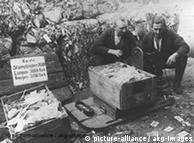
This credit crunch, in fact, is mainly deflationary. When companies and households can't borrow as they wish, and spend accordingly, economic activity contracts and prices can fall. So the central banks' money machines are trying to counteract that deflationary force.
If the global economy were running smoothly, and money were easy to get, the liquidity operations of central banks would indeed be inflationary, economists say.
But now, the supply of readily available money is insufficient to meet demand. So central banks are not indulging in oversupplying markets with money. Rather, they're trying to increase the supply merely to a point where it can meet demand.
“Concern about inflation can be put aside for the moment,” said Edwin Truman, a senior fellow at the Peterson Institute for International Economics in Washington, and long-time senior Fed official for international affairs.
Plus, the central banks are not dishing money out for free. In most cases, they are lending the money out, and taking collateral in return. Their balance sheets are holding up.
“I think the central banks, as I understand it in general, are being reasonably careful,” said Mr. Truman. “The risk of a substantial loss at a central bank is minimal.”
When central banks issue extra cash for money markets, they keep their balance sheets in good shape by taking collateral from borrowers in return. The collateral is marked down by a prescribed “haircut” decided upon by the central bank.
The central bank does not normally just hang on to the collateral. It holds it for only a short time – long enough to help the markets fund their daily operations.
It is possible, but unlikely, that the central bank could actually lose money if the value of the collateral collapses while the central bank is holding it, Mr. Truman said.
Not everyone agrees. Some fear that the financial crisis is so out of control that the Fed and other central banks don't have a hope of counteracting it with their own funds alone.
“The Federal Reserve balance sheet is about $1.2-trillion,” David Shulman, senior economist at the UCLA Anderson Forecast, told the Washington Post this week. “But we have an $11-trillion mortgage market, a $5-trillion credit-default-swaps market. The central banks are nowhere near large enough to handle this problem right now.”
Concerns about fiscal health weigh heavily, as well.
It's hard to know how much of the $700-billion rescue plan passed last week by the U.S. Congress will have to be funded by U.S. taxpayers. But pressure is growing in the United States and in Europe for governments to pledge their own money to back up banks and their troubled customers.
On Tuesday, the International Monetary Fund urged governments to inject capital, buttress troubled assets, and use their funds to prevent a “fire sale” of problem banks and their holdings.
At their meeting last weekend in Paris, the leaders of France, Germany, Italy and Britain agreed that European rules limiting government deficits and state aid should be applied flexibly given the exceptional circumstances.
And in Canada, former tough talk about deficits from political leaders has softened in the past couple of days.
But most economists say that even if Ottawa needs to come to the economy's rescue just as its revenues are diminishing because of falling commodity prices, the country can afford to run a small deficit.
“There is ample room to run deficits … and Canada has lots of room for lender-of-last-resort liquidity operations,” Mr. Laidler said.
The U.S. fiscal situation is another question, however. Already carrying a large debt, more stimulus packages and bailouts will take a toll, he said.
“The U.S. is extraordinarily vulnerable.”
© Copyright The Globe and Mail
Retail Panics and Yell Sell Sell Sell!
Nervous investors bombard advisers
STEVE LADURANTAYE
Wednesday, October 08, 2008
Investment advisers are being bombarded with questions from panicked clients, as each passing day makes it more difficult for the average investor to understand what's happening to their money.
“You have all these retail investors who just want to get out of the market,” said Andrew Pyle, a Peterborough, Ont.-based wealth adviser for Scotia McLeod. “They look at what's happening, and they see bailouts that aren't working, nothing seems to help. They don't see evidence of recovery in the markets, and they are just literally asking to get out.”
The credit crisis, which had been simmering for more than a year but exploded in September with the U.S. government's takeover of mortgage lenders Freddie Mac and Fannie Mae, was initially perceived as a U.S story that wasn't likely to spread into the wider global economy.
But since then, the U.S. government was forced to rescue insurer American International Group for $85-billion (U.S.), Lehman Brothers Holding Inc. declared bankruptcy and national governments around the world are bailing out their banks.
Now, less than a week after the U.S. government passed a $700-billion bailout package for the country's ailing financial sector, central banks around the world cut interest rates in a co-ordinated effort intended to get banks lending to one another again.
Yet, the Dow Jones industrial average and S&P/TSX have fallen more than 20 per cent each since the beginning of September, despite the heavy government intervention. Canadian investors, rattled by the rapid decline of their key index, pulled a record $4.6-billion from mutual funds last month.
“You're seeing all of this volatility, and retail investors need to deal with that,” said Mr. Pyle. “And they don't want to deal with it. They're willing to sell, because they aren't worried about missing out on a big rally. They think that's a small price to pay for the sanity of sleeping well at night.”
David Baskin, president of Toronto-based Baskin Financial Services Inc., which manages client assets of about $400-million (Canadian), has heard a lot questions over the course of his career, but never had a client ask him whether markets could go to zero. That is, until last week.
“It's a pretty incredible indication of how negative the market psychology is,” he said. “We're heading to a recession. But a recession doesn't mean barefoot hobos hopping trains and selling apples in the street, it means slower growth.”
He said retail investors have largely gone on what he termed a “buyer's strike,” refusing to get involved in day-to-day trading until three or four days of solid gains on major markets. Before they are interested in putting up money, he said, they want to see large institutions step up and snap up big stakes in beleaguered companies.
“Nobody wants to take a chance on stock just to watch it erode out from under them,” he said. “I have a sense that might be starting to change a little bit, but I have no great evidence and may be whistling in the dark. But clearly, they want to see some buying action out of institutions before jumping back.”
More to come
© Copyright The Globe and Mail
