Monday, September 29, 2008

Red Red Red - Cash Is King!

And I'm in Cash After The Last Massive 2 Day Rally
Stocks, oil plunge as credit crisis bites STEVE LADURANTAYEMonday, September 29, 2008
The Toronto Stock Exchange plunged Monday morning, kicking off a fresh week on weaker oil and a credit crisis that continues to reverberate through the global economy.
In Toronto, the S&P/TSX lost 3.57 per cent, or 432.35, to 11693.65 at 11 a.m. (ET). Oil was down $6.55 (U.S.) a barrel to $100.34.

“There is a ‘Just-get-me-out mentality,'” said Lyle Stein, president of Red Barn Capital in Toronto. “I think there was a bit of hope that this bailout would put a finger in the dyke, but obviously it isn't the plug people were hoping for.”

The Dow Jones industrial average fell 2.32 per cent, or 258.94 points, to 10,884.19. The broader S&P 500 fell 3.29 per cent, or 39.91 points, to 1,173.36.

“Despite the U.S. bailout plan now being committed to paper, there's hardly a jubilant mood expected as the new trading week gets under way,” commented Tony Cross, director of Monk Communications. “The fact the funds won't be released in one lot but instead a series of tranches is certainly detracting from its appeal.”

The Federal Deposit Insurance Corp. said Monday that Citigroup Inc. would take over Wachovia's banking operations. Citigroup will absorb up to $42-billion (U.S.) in losses, with the government backing any further losses. In return, Citigroup will issue FDIC $12-billion in preferred shares and warrants.

Wachovia is the latest institution to succumb to the credit crisis – mortgage lenders Freddie Mac and Fannie Mae were taken over by the government to protect $5-trillion in mortgages, insurer American International Group was bailed out by the governments in an $85-billion effort, Lehman Brothers Holdings declared bankruptcy and Merrill Lynch was absorbed by the Bank of America.

The banking crisis also cut deeply into Europe over the weekend, with Fortis and Bradford & Bingley banks receiving government bailouts and other European banks getting hammered in the markets on Monday.

“Irrespective of the current relief program, it must be recognized that the past year of deterioration in credit conditions globally argues for softer than expected order and sales activity over the next six months, at a minimum, for many industries tied to capital spending where returns on investment are compared to what have been higher costs of capital,” commented Tobias Levkovich, Citigroup's chief equities strategist.

“This reality cannot be turned around overnight and thus leaves earnings risk for technology hardware companies, industrial products producers, raw materials vendors and even energy equipment and services.”
More to come
© Copyright The Globe and Mail


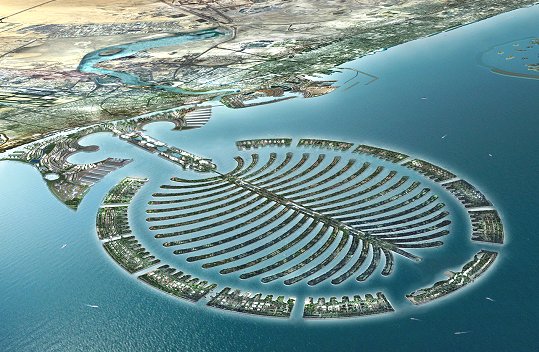
Dubai's $1.5B Palm Island opens, but global money crisis may hurt its success


Island of wealth in an ocean of red ink TheStar.com - Business - Island of wealth in an ocean of red ink

Dubai's $1.5B Palm Island opens, but global money crisis may hurt its success
September 28, 2008 Adam SchreckBarbara SurkAssociated Press
DUBAI, United Arab Emirates–It's the latest word in Persian Gulf excess: a $1.5 billion (U.S.) resort boasting a $25,000-a-night suite and dolphins flown in from the South Pacific – all atop an island built in the shape of a palm tree.

Environmentalists have long criticized both Palm Jumeirah island and some of the features of the Atlantis hotel, which opened earlier this week. And analysts wonder if global financial turmoil will crimp Dubai's big hopes for tourists.

Dubai is not blinking, though.
The 113-acre resort on the artificial island off the coast is among the city-state's biggest bets that tourism can help sustain its economy once regional oil profits stop flowing.
"You don't build a billion-and-a-half dollar project just anywhere in the world," said Alan Leibman, president and managing director of Kerzner International, the hotel operator that teamed with Dubai developer Nakheel on the resort.

With its own oil reserves running dry, Dubai hopes to woo those eager to make money and those who know how to spend it – even as much of the global economy sours.
For years, the emirate – one of seven semi-independent states that make up the United Arab Emirates – has been feverishly building skyscrapers and luxury hotels.

A key piece of the strategy has been to cultivate an image in the west as a sun-kissed tourist destination despite its intense summer heat, conservative Muslim society and dearth of historic sites.

Among the daring projects are an indoor ski slope, the as-yet-incomplete world's tallest skyscraper and a growing archipelago of man-made islands such as Palm Jumeirah – the smallest of three such projects planned.

Much of the focus at the Atlantis, modelled on a sister resort in the Bahamas, is on ocean-themed family entertainment. The resort has a giant, open-air tank with 65,000 fish, stingrays and other sea creatures and a dolphinarium with more than two dozen bottlenose dolphins flown in from the Solomon Islands.

The hotel's top floor aims squarely at the ultra-wealthy. A three-bedroom, three-bathroom suite complete with gold-leaf, 18-seat dining table is on offer for $25,000 a night.
Environmental groups and some people in the Solomons protested the sale of the dolphins to the resort as well as the 30-hour plane flight to get them to Dubai.

Dubai's development has long been criticized by environmental activists, who say the construction of artificial islands hurts coral reefs and even shifts water currents. They also point to growing water and electricity consumption.

Developers seem undaunted. For the moment, the Atlantis shares the island only with rows of high-end houses and construction sites. But other international names are set to move in.
Donald Trump plans a hotel straddling the centre of the tree-shaped island's "palm," and the storied QE2 ocean liner will become a hotel and a tourist attraction docked alongside its ``trunk." An 1,800-seat theatre nearby will house a permanent Cirque du Soleil show beginning in the summer 2011.

"Palm Jumeirah in and of itself will become one of Dubai's major tourist attractions," said Joe Cita, chief executive of Nakheel's hotel division.

Boosting the number of attractions on the island will not only entice more visitors, but also persuade them to spend more time and money in the city, he said.
By 2010, Dubai aims to attract 10 million hotel visitors annually, up from about seven million in 2007. Atlantis alone will increase the city's hotel capacity by 3 per cent.
So far, demand appears strong. The Middle East had the highest hotel occupancy rates in the world during the first half of the year, with Dubai leading the region at 85.3 per cent, according to Deloitte Touche Tohmatsu.

Dubai also had the highest room rates in the region, although revenue growth is slowing, Deloitte noted.

Atlantis' backers are optimistic they can fill its 1,539 rooms despite the economic uncertainty wracking some of the world's richest economies. Their focus is on well-heeled travellers from Europe, Russia, Asia and elsewhere in the Middle East.

"People will still take family holidays," Leibman said. ``Dubai is still good value when you're paying in pounds, (or) you're paying in euros.'' Nakheel, the developer, and Kerzner, the hotel operator, are both privately held companies and do not release sales data. Leibman said demand from tour groups looks strong well into the first part of next year.

Yet Marios Maratheftis, head of regional research for the Middle East, North Africa and Pakistan at Standard Chartered Bank in Dubai, said there is "good reason" to be concerned that global financial problems could hit Dubai's tourism industry. Nevertheless, he said, the city's long-term outlook remains positive.

Kerzner has grown increasingly close to Dubai in recent years. In 2006, the company took itself private in a $3.8 billion deal partially bankrolled by a division of Nakheel's state-owned parent, Dubai World. Nakheel retains a large stake in the company.

Nakheel's hotel division has expanded rapidly. The company's holdings include New York's Mandarin Oriental, the Fontainebleau in Miami, and the W Hotel in Washington. Its parent also owns a minority stake in MGM Mirage Inc. and is teaming with that casino operator and Kerzner to build a multibillion-dollar casino on the Las Vegas Strip.

European Banks Wobble Monday


Lawmakers release plan to enact historic bailout of nation's financial system

Rescue bill unveiled

Lawmakers release plan to enact historic bailout of nation's financial system.
By Jeanne Sahadi, CNNMoney.com senior writer

Last Updated: September 28, 2008: 10:35 PM ET

NEW YORK (CNNMoney.com) -- The federal government would put up as much as $700 billion in a far-reaching plan to rescue the nation's troubled financial system, according to a bill unveiled by lawmakers on Sunday.

House Speaker Nancy Pelosi, D-Calif., said she hopes the House will take up the bill on Monday. Sen. Majority Leader Harry Reid, D-Nev., said he believes the Senate can move on the legislation by Wednesday.

Pelosi said the provisions added by Congress will protect taxpayers from having to pay for the bailout.
"We sent a message to Wall Street - the party is over," she said at a press conference with Reid and other Democratic leaders from the House and Senate.

The core of the bill is based on Treasury Secretary Henry Paulson's request for authority to purchase troubled assets from financial institutions so banks can resume lending and so the credit markets, now virtually frozen, can begin to operate more normally.

But Democrats and Republicans - concerned about the potential taxpayer cost - have added several conditions and restrictions to protect taxpayers on the down side and give them a chance at some of the potential upside if the companies benefit from the plan. "People have to know that this isn't about a bailout of Wall Street. It's a buy-in so we can turn our economy around," Pelosi said.

Key negotiators for the financial rescue plan will be busy trying to line up votes on Capitol Hill on Sunday to support the accord they reached soon after midnight. House Majority Leader Steny Hoyer, D-Md., told CNN he believes a majority of representatives on both sides of the aisle can and will support the bill.

President Bush, in a statement Sunday evening, said "this is a difficult vote, but with the improvements made to the bill, I am confident Congress will do what is best for our economy by approving this legislation promptly."

On Sunday evening, the House Republican working group, which was stringently opposed to earlier drafts of the plan and offered a counterproposal, indicated it would support the bill, and its members are encouraging other Republicans in the House to do the same.
"Nobody wants to have to support this bill, but it's a bill that we believe will avert the crisis that's out there," House Minority Leader John Boehner, R-Ohio, told reporters.
Key provisions of the bill

Doling the money out: The $700 billion would be disbursed in stages, with $250 billion made available immediately for the Treasury's use. Authority to use the money would expire on Dec. 31, 2009, unless Congress certifies a one-year extension.
Protecting taxpayers: The ultimate cost to the taxpayer is not expected to be near the amount the Treasury invests in the program. That's because the government would buy assets that have underlying value.

If the Treasury pays fair market value - which investors have had a hard time determining - taxpayers stand a chance to break even or even make a profit if those assets throw off income or appreciate in value by the time the government sells them. If it overpays for the assets, the government could be left with a net loss but would get something back on the open market for the assets when it eventually sells them.

If it ends up with a net loss, however, the bill says the president must propose legislation to recoup money from the financial industry if the rescue plan results in net losses to taxpayers five years after the plan is enacted.
In addition, Treasury would be allowed to take ownership stakes in participating companies.
Stemming foreclosures: The bill calls for the government, as an owner of a large number of mortgage securities, to exert influence on loan servicers to modify more troubled loans.
In cases where the government buys troubled mortgage loans directly from banks, it can adjust them more easily.

Limiting executive pay: Curbs would be placed on the compensation of executives at companies that sell mortgage assets to Treasury. Among them, companies that participate will not be able to deduct the salary they pay to executives above $500,000.
They also will not be allowed to write new contracts that allow for "golden parachutes" for their top 5 executives if they are fired or the company goes belly up. But the executives' current contracts, which may include golden parachutes, would still stand.

Overseeing the program: The bill would establish two oversight boards.
The Financial Stability Oversight Board would be charged with ensuring the policies implemented protect taxpayers and are in the economic interests of the United States. It will include the Federal Reserve chairman, the Securities and Exchange Commission chairman, the Federal Home Finance Agency director, the Housing and Urban Development secretary and the Treasury secretary.

A congressional oversight panel would be charged with reviewing the state of financial markets, the regulatory system and the Treasury's use of its authority under the rescue plan. Sitting on the panel would be 5 outside experts appointed by House and Senate leaders.
Insuring against losses: Treasury must establish an insurance program - with risk-based premiums paid by the industry - to guarantee companies' troubled assets, including mortgage-backed securities, purchased before March 14, 2008.

The amount the Treasury would spend to cover losses minus company-paid premiums would come out of the $700 billion the Treasury is allowed to use for the rescue plan.
Far-reaching program

Paulson first announced the administration would seek an economic bailout plan on Sept. 18, after meeting with key lawmakers in the House and Senate - a meeting that left lawmakers looking ashen when they spoke to the press afterwards.

If enacted, the rescue plan would be the most dramatic and extensive government intervention in the economy since the Great Depression. President Bush on Sept. 24 gave a prime-time address to the nation in which he urged lawmakers to pass his plan and warned that the "entire economy is in danger."

The aim of the rescue is to unfreeze the credit markets - short-term lending among banks and corporations. The core of the problem is bad real estate loans that have led to record foreclosures when the housing bubble burst and home prices declined.
In the past two weeks, the banking world and Wall Street have been reordered by a wave of collapses and corporate mergers. The most recent development was the seizure by federal regulators on Thursday night of Washington Mutual, once the nation's largest thrift and a major mortgage lender.

The chill of the credit freeze has been felt far beyond Wall Street, as well. Businesses large and small have seen the cost of borrowing spike higher.
At the same time, the scale of the administration's plan - and the quick pace of the debate over it - has given pause to many Americans and lawmakers worried about its potential cost to taxpayers.

"We begin with a very important task, a task to stabilize the markets, to protect all Americans - and do it in a way that protects the taxpayer to the maximum extent possible," Paulson said early Sunday morning.

CNN's Jessica Yellin and Deirdre Walsh and CNNMoney.com's Chris Isidore and Tami Luhby contributed to this report.
An earlier version of this article incorrectly reported that Congress had publicly released a draft bill that CNN obtained.

First Published: September 28, 2008: 10:12 AM ET